
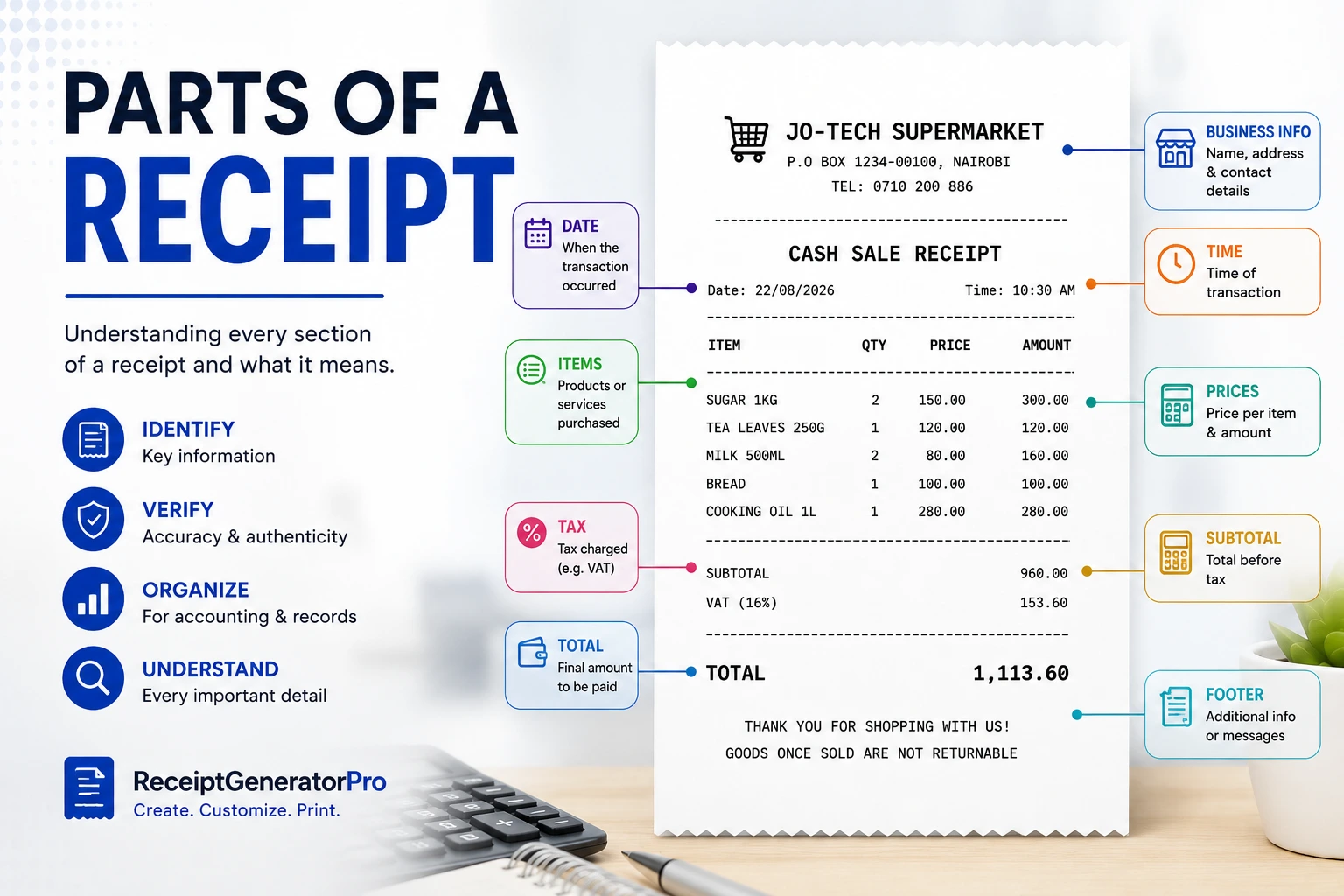
Understanding the parts of a receipt helps businesses create professional records and helps customers understand exactly what they paid for.
This guide explains the main parts of a receipt, what each section means, what information should appear on a receipt, and how to create a professional receipt.
What Are the Parts of a Receipt?
The main parts of a receipt normally include:
- Business or seller information
- Receipt title
- Receipt number
- Transaction date and time
- Customer information
- Description of goods or services
- Quantity
- Unit price
- Line-item total
- Subtotal
- Discounts
- Taxes and fees
- Grand total
- Payment method
- Amount paid
- Change or balance
- Transaction reference
- Return or refund information
- Thank-you message
- Business footer information
Not every receipt will contain every one of these sections.
A simple cash receipt may contain only the most important details. A detailed retail, restaurant, hotel, medical, or business receipt may contain many more fields.
Generate Receipt Online
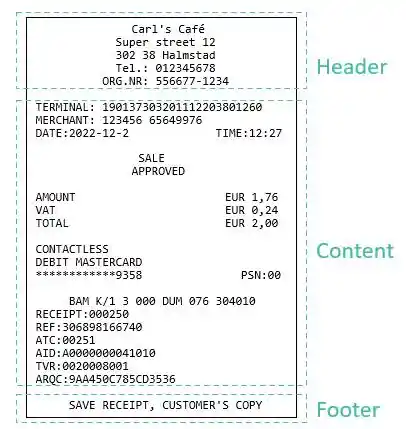
Receipt Header, Body and Footer
A receipt can also be understood in three broad sections.
Receipt Header
The header is the top portion.
It normally contains:
- Business name
- Logo
- Address
- Contact details
- Receipt title
- Receipt number
- Date and time
The header tells the customer who issued the receipt and identifies the transaction.
Receipt Body
The body contains the transaction details.
It normally includes:
- Products or services
- Quantity
- Unit prices
- Discounts
- Taxes
- Subtotal
- Total
This is the main part of an itemized receipt.
Receipt Footer
The footer appears at the bottom.
It can contain:
- Payment details
- Transaction reference
- Return policy
- Warranty information
- Thank-you message
- Website
- QR code
This three-part structure makes a receipt easy to read.
FAQs
What are the main parts of a receipt?
The main parts are the seller’s information, receipt number, date, customer information where applicable, itemized goods or services, quantities, prices, subtotal, taxes or discounts, total amount, payment method, and transaction reference.
What should be at the top of a receipt?
The top normally contains the business name, logo, address, contact information, receipt title, receipt number, and transaction date.
What goes in the middle of a receipt?
The middle normally contains the products or services purchased, quantities, unit prices, and line-item totals.
What goes at the bottom of a receipt?
The bottom can contain subtotal, discounts, taxes, final total, payment information, transaction reference, change, return policy, warranty information, and a thank-you message.
Conclusion
The parts of a receipt work together to create a clear record of a transaction.
At the very least, a useful receipt should identify the seller, explain what was purchased or paid for, show the amount involved, provide the transaction date, and make the payment information clear.