
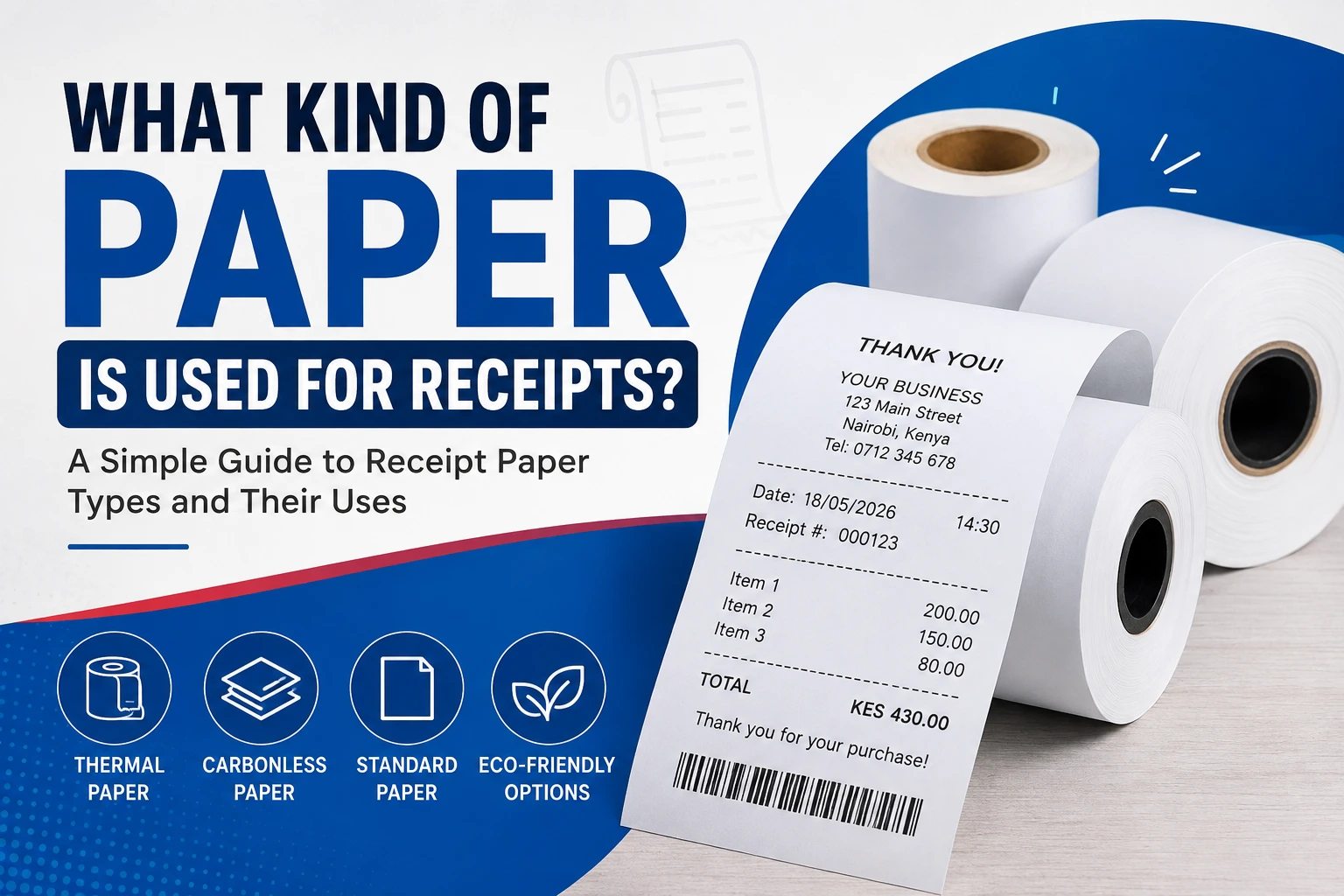
The most common paper used for receipts is thermal receipt paper, also called thermal paper rolls.
Unlike ordinary paper, thermal paper has a heat-sensitive coating on its surface. When the printer’s thermal printhead heats specific areas of the paper, the coating reacts and produces the printed text or image.
Common receipt paper sizes include:
- 57mm thermal paper – commonly used in small POS machines and compact receipt printers.
- 80mm thermal paper – widely used in supermarkets, shops, restaurants, and larger POS systems.
- 112mm thermal paper – used in some specialized receipt and transaction printers.
Thermal paper is popular because it prints quickly, does not require ink or toner, and is relatively affordable.
What is Thermal Receipt Paper Made Of?
Thermal receipt paper generally consists of a paper base with a heat-sensitive coating.
The coating contains chemicals that react when heated by the printer’s thermal printhead. This allows the printer to create text without using traditional ink.
Some thermal papers are also designed with additional coatings to improve print quality, durability, or resistance to environmental conditions.
How Do Receipt Papers Work?
Thermal receipt paper works through a process called thermal printing.
A thermal receipt printer has a printhead containing many small heating elements. When you print a receipt, the printer sends the paper underneath this printhead.
The heating elements activate selected areas of the paper. The heat causes the special coating on the paper to darken, creating letters, numbers, logos, and other information.
This means a thermal printer does not need an ink cartridge or toner.
Why Do Receipt Printers Use Thermal Paper?
Thermal paper is well suited to receipts because it offers several advantages:
- Fast printing: Receipts can be printed within seconds.
- No ink required: The paper reacts directly to heat.
- Low maintenance: There are no ink cartridges to replace.
- Quiet operation: Thermal printers generally produce little noise.
- Easy replacement: Paper rolls can be replaced quickly.
- Compact printing: Thermal printers can be small enough for portable POS systems
How Long Does Thermal Receipt Paper Last?
The lifespan of a thermal receipt depends on the paper quality and how it is stored.
Heat, direct sunlight, moisture, friction, and certain chemicals can affect thermal printing. A receipt stored in a hot or exposed environment may fade faster than one kept in suitable conditions.
For important records, businesses should keep proper digital or electronic copies rather than relying only on printed thermal receipts.
What Is the Difference Between 57mm and 80mm Receipt Paper?
The main difference is the width of the paper roll.
57mm paper is narrower and is suitable for compact printers. 80mm paper is wider and provides more room for receipt information.
For example, an 80mm receipt can usually accommodate longer product names and wider receipt layouts more comfortably than a 57mm receipt.
The printer determines which size you should use.
Why do receipts fade?
Thermal receipts can fade because their heat-sensitive coating is affected by factors such as heat, sunlight, moisture, friction, and certain chemicals.
Summary
The paper most commonly used for modern receipts is thermal receipt paper. It is specially coated to react to heat, allowing POS and receipt printers to produce text without ink or toner.