
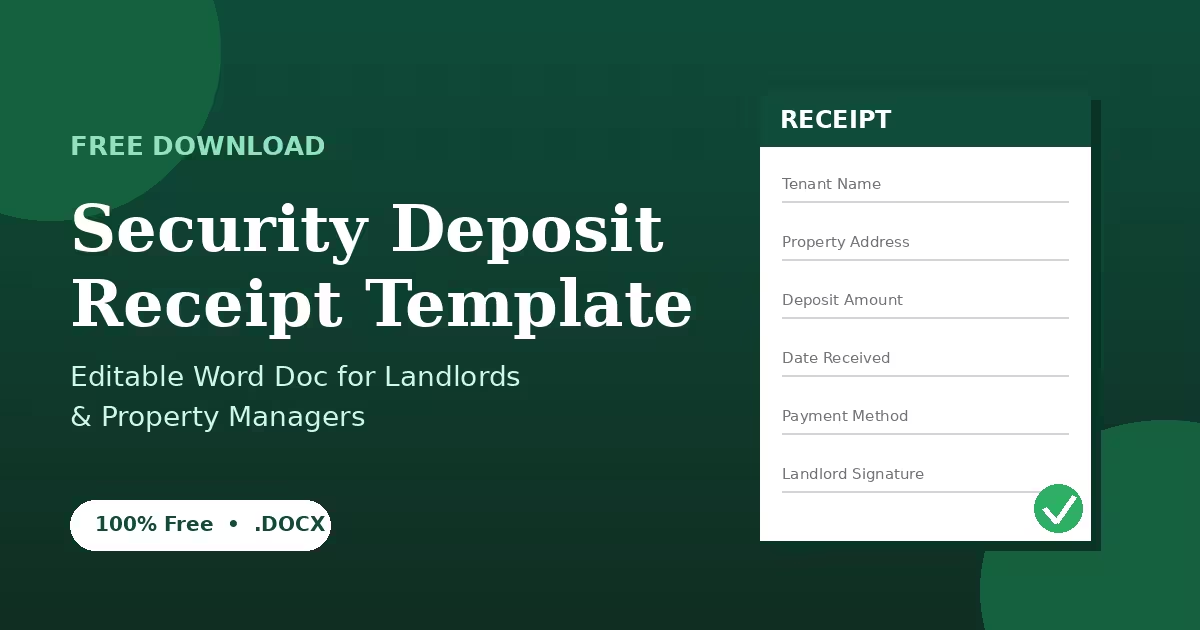
A security deposit receipt is a short written document that proves a landlord received a tenant’s deposit, states the exact amount, and records where the money is being held.
You need one because many states legally require it, and because it’s the single easiest way to prevent a “you never paid me” or “I never got my money back” dispute later. Below you’ll find a free, editable Word template you can download right now, along with a walkthrough of exactly what to put in it.
Free Security Deposit Receipt Template
Download the editable template below, open it in Microsoft Word or Google Docs, fill in the highlighted fields, and you’re done in under two minutes.
How to Fill Out the Template Step by Step
- Enter the date and location fields first. Fill in today’s date and the full property address, including unit number.
- List every tenant who paid. If two people split the deposit, name both so either party can produce proof later.
- Write the deposit amount two ways. Use numerals ($1,500.00) and, if your state requires it, spell the amount out to avoid any ambiguity.
- Record exactly how it was paid. Note “cash,” “check #1042,” or “bank transfer confirmation #XXXXX” so the payment is traceable.
- Disclose where the money is held. Add the bank name and account type if your state requires it, or your internal escrow reference if you manage multiple properties.
- Sign and date it. Both parties should sign; if you’re sending it electronically, a typed name with a timestamp is usually acceptable, but check your state’s e-signature rules for leases.
- Give the tenant a copy immediately. Email a PDF or hand over a printed copy the same day you receive the deposit, not weeks later.
- Keep your own copy for the full tenancy plus any state-mandated retention period — most disputes surface at move-out, sometimes a year or more after the receipt was issued.
What to Include in a Security Deposit Receipt
A solid template covers these fields:
- Landlord or property manager name — the party accepting the deposit
- Tenant name(s) — everyone listed on the lease who contributed to the deposit
- Rental property address — the specific unit, not just the building
- Deposit amount — the exact dollar figure, written in numerals and ideally spelled out
- Date received — the day the funds actually changed hands
- Payment method — cash, check, money order, or electronic transfer, including a check or transaction number
- Where the deposit is held — the bank name and account type, required in several states
- Signatures — both landlord and tenant, with the date signed
FAQs
Is a security deposit receipt legally required?
It depends on your state. Many states require landlords to provide written proof of a deposit, often within a specific number of days, while others don’t mandate it at all. Providing one is good practice everywhere, required or not.
Can a security deposit receipt be sent by email?
Yes, in most cases an emailed PDF or scanned copy is acceptable, as long as it contains the same information as a paper receipt and both parties retain a copy. Some states require a physical or certified mailed copy, so check local rules if you want extra protection.
How long should I keep a security deposit receipt?
Keep it for the entire length of the tenancy plus your state’s deposit-return deadline after move-out, typically at least one year total. Landlords managing multiple units should keep records even longer in case of a future legal claim.
Does the receipt need to say where the deposit is being held?
Some states require landlords to disclose the bank name and account type where the deposit is held, since certain jurisdictions require deposits to sit in a separate, interest-bearing account. Including this line is a good habit even where it isn’t required by law.