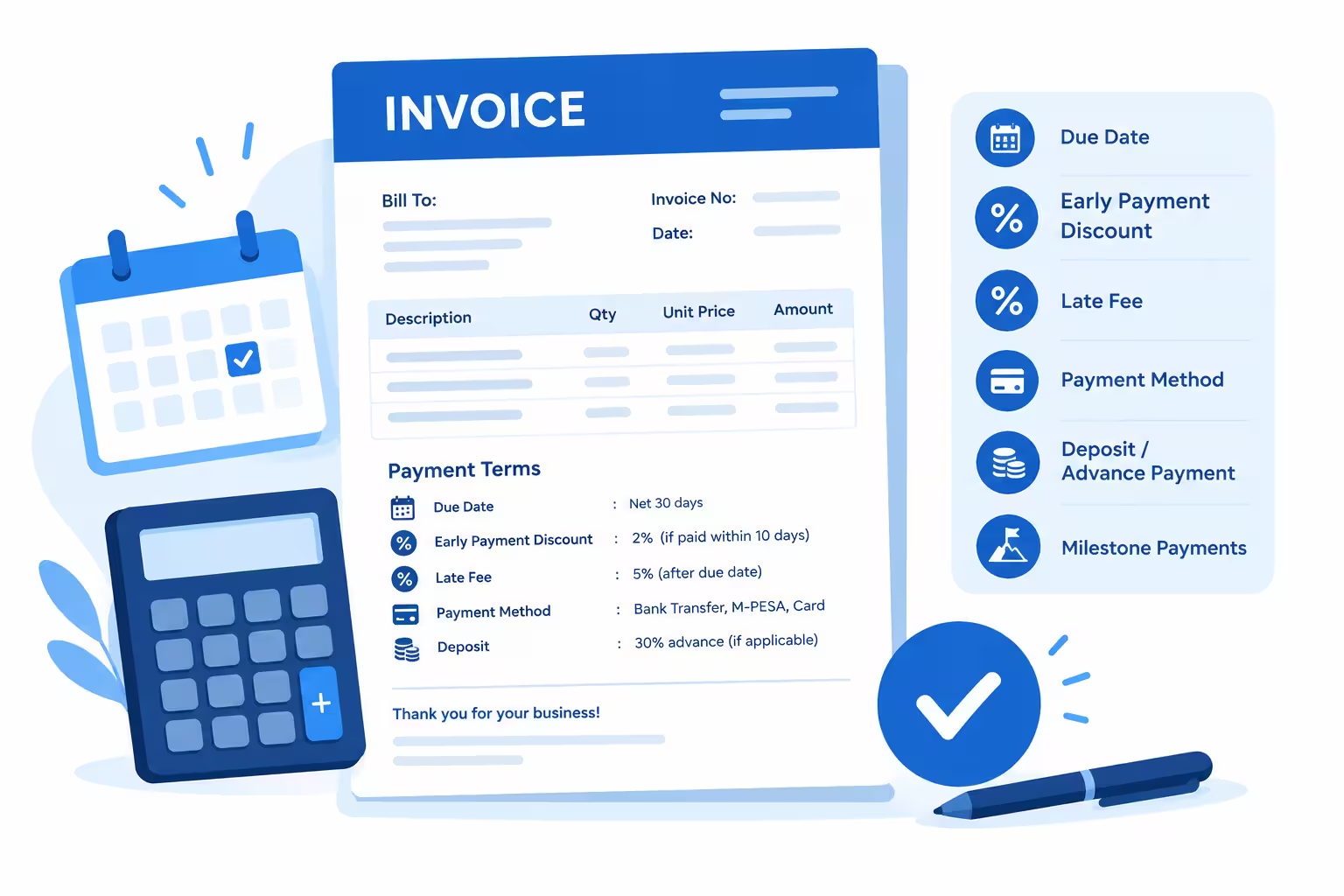
Invoice terms and conditions are the rules that explain how, when, and under what conditions a customer should pay an invoice. They commonly cover the payment due date, accepted payment methods, late fees, discounts, deposits, refunds, and other conditions agreed between the buyer and seller.
Clear terms and conditions for an invoice help prevent misunderstandings and make it easier for customers to understand exactly what is expected after receiving an invoice.
What Are Invoice Terms and Conditions?
Invoice terms and conditions are written instructions placed on an invoice or referenced through a separate agreement. They provide important information about payment deadlines, payment methods, late charges, discounts, deposits, and other requirements.
Payment terms are particularly important because they tell the customer when payment is due. For example, Net 30 generally means the customer should pay the invoice within 30 days of the invoice date.
For larger projects, invoice terms may also describe installment payments, deposits, project milestones, cancellation rules, or other conditions agreed upon before the work begins.
What Should Invoice Terms and Conditions Include?
The exact terms depend on the business and transaction, but a useful invoice should clearly communicate the following information.
1. Payment Due Date
State exactly when the customer must pay. You can use a specific date or a standard term such as Net 15 or Net 30.
For example:
Payment is due within 30 days of the invoice date.
For maximum clarity, providing the actual due date alongside the payment term can help prevent confusion. Stripe recommends making payment requirements clear and actionable on invoices.
2. Invoice Payment Terms
Your invoice payment terms specify how quickly the customer must settle the invoice.
Common examples include:
- Due upon receipt: Payment is expected when the customer receives the invoice.
- Net 7: Payment is due within 7 days.
- Net 15: Payment is due within 15 days.
- Net 30: Payment is due within 30 days.
- Net 60: Payment is due within 60 days.
- 2/10 Net 30: The customer receives a 2% discount if payment is made within 10 days; otherwise, the full amount is due within 30 days.
- 50% upfront, 50% on completion: Payment is divided between the beginning and end of a project.
These are commonly used invoice payment structures, although businesses can negotiate terms that fit their transactions.
3. Accepted Payment Methods
Tell customers how they can pay the invoice. Depending on your business, this could include bank transfer, credit card, debit card, check, cash, PayPal, or another digital payment method.
For bank payments, include the necessary account information and make sure the details are accurate. Clear payment instructions can reduce delays caused by customers having to contact you for payment information.
4. Late Payment Fees
If your business charges a late fee, state the amount or rate and when it applies.
For example:
A late fee of 2% may be charged on unpaid balances after the due date.
The exact fee and whether it is legally permitted can depend on the applicable contract and local law. Make sure customers are informed about late charges before they become applicable.
5. Early Payment Discounts
Businesses can use discounts to encourage customers to pay invoices early.
For example:
A 2% discount is available when payment is received within 10 days.
This can also be written as 2/10 Net 30, meaning the customer receives a 2% discount for paying within 10 days, while the full invoice amount is due within 30 days.
6. Deposits and Advance Payments
Some businesses require a deposit before starting a project. This is particularly useful for custom work, large projects, or transactions involving significant upfront costs.
An invoice could state:
A 50% deposit is required before work begins. The remaining 50% is due upon completion.
Advance or staged payments can help businesses manage cash flow during longer projects.
7. Partial or Milestone Payments
For large projects, requiring the entire amount at the end may not be practical. Instead, the invoice terms can divide payment into stages.
For example:
- 30% deposit before work begins
- 40% upon completion of the first milestone
- 30% upon final delivery
Milestone payments are commonly used for larger or project-based work because payment can be linked to specific stages of delivery.
8. Refund and Cancellation Terms
If your business has specific refund or cancellation rules, explain them clearly.
For example:
Deposits are nonrefundable once work has commenced.
Only include terms that accurately reflect your business policy and any applicable laws or contractual obligations.
9. Disputed Invoice Terms
You can explain how customers should report an incorrect charge or dispute an invoice.
For example:
Please notify us of any invoice discrepancies within 7 days of receipt.
This gives customers a clear process for raising questions about charges instead of simply withholding payment without explanation.
10. Taxes and Additional Charges
If applicable, explain whether taxes, shipping, delivery charges, service fees, or other costs are included in the invoice total.
For example:
Prices exclude applicable sales tax and delivery charges.
The wording should match the actual pricing arrangement and applicable tax requirements.
Common Invoice Payment Terms Explained
| Payment term | Meaning |
|---|---|
| Due upon receipt | Payment is expected as soon as the invoice is received. |
| Net 7 | Payment is due within 7 days. |
| Net 15 | Payment is due within 15 days. |
| Net 30 | Payment is due within 30 days. |
| Net 60 | Payment is due within 60 days. |
| 2/10 Net 30 | 2% discount if paid within 10 days; otherwise full payment is due within 30 days. |
| COD | Payment is made when goods or services are delivered. |
| EOM | Payment is due at the end of the month. |
| Advance payment | Payment is made before goods or services are provided. |
| Milestone payment | Payment is made at agreed stages of a project. |
QuickBooks and Stripe both identify Net terms, payment upon receipt, advance payments, milestone payments, and early-payment discounts among commonly used payment arrangements.
Invoice Terms and Conditions Examples
Here are practical examples businesses can adapt for their invoices.
Simple Invoice Terms and Conditions
Payment is due within 30 days of the invoice date. Please include the invoice number with your payment. Late payments may be subject to additional charges as agreed in the applicable contract.
Professional Invoice Payment Terms
Payment is due by the date shown on this invoice. We accept payment by bank transfer, credit card, or other approved payment methods. Please contact us promptly if you have questions regarding this invoice.
Late Payment Terms
Payment must be received by the stated due date. Overdue balances may incur a late payment charge where permitted by applicable law and the parties’ agreement.
Deposit Terms
A 50% deposit is required before work begins. The remaining balance is due upon completion and delivery of the agreed services.
Project Payment Terms
Payments will be made according to the project milestones stated in the service agreement. Each milestone invoice is due within 15 days of the invoice date.
How to Write Good Invoice Terms and Conditions
Good invoice terms should be clear, specific, and easy to understand. Avoid complicated wording that makes customers uncertain about when or how they should pay.
Start by deciding when you need to be paid. A small business with tight cash flow may choose shorter terms, while established business relationships or larger projects may use longer payment periods. Stripe notes that payment terms should balance the business’s cash-flow needs with the customer’s payment process.
Make the due date easy to find. Instead of writing only “Net 30,” consider showing both the term and the actual due date.
For example:
Payment Terms: Net 30 — Due: October 30, 2026
Also make payment instructions straightforward. Customers should not have to search through emails or contact your business to find out where to send payment.
Where Should Invoice Terms and Conditions Go?
Invoice terms and conditions are commonly placed near the bottom of the invoice, usually below the totals and payment information.
A short version can be included directly in the invoice footer, while detailed legal or contractual terms can be included in a separate agreement referenced by the invoice.
Keeping the most important payment information visible makes the invoice easier for customers to understand and act on.
Tips for Better Invoice Payment Terms
Use the following practices when creating your invoice terms:
- State a clear payment due date.
- Use simple language.
- Specify accepted payment methods.
- Clearly identify deposits or upfront payments.
- Explain late-payment charges before they apply.
- State early-payment discounts clearly.
- Use milestone payments for suitable projects.
- Make the invoice number easy to identify.
- Keep your terms consistent unless a different agreement has been made.
- Put important payment instructions where customers can easily see them.
QuickBooks recommends establishing clear payment expectations and documenting deadlines, fees, penalties, and other conditions in writing.
How to Make an Invoice With Clear Payment Terms
You can create an invoice by starting with your business and customer information, adding the products or services provided, calculating the total, and then adding the payment terms and due date.
A simple invoice should normally show the invoice number, invoice date, customer information, description of goods or services, amounts, taxes where applicable, total amount due, payment instructions, and relevant terms and conditions.
If you need a quick way to create an invoice, use our Free Invoice Generator to create a professional invoice.
For additional wording ideas, see our guide to Invoice Footer Text Examples.
Summary
Invoice terms and conditions explain when and how customers should pay and can also cover late fees, discounts, deposits, refunds, payment methods, and project-specific requirements. Clear terms reduce confusion and give both businesses and customers a straightforward understanding of their payment obligations.
For most businesses, the most important details are the payment due date, invoice payment terms, accepted payment methods, and any applicable late fees or discounts. Keep the wording simple and make sure the terms match the agreement with your customer.
Frequently Asked Questions
What are standard invoice terms and conditions?
Standard invoice terms commonly include the payment due date, payment method, late-payment charges, early-payment discounts, deposits, refund rules, and other transaction-specific requirements.
What does Net 30 mean on an invoice?
Net 30 generally means the customer is expected to pay the full invoice amount within 30 days of the invoice date.
What are the most common invoice payment terms?
Common terms include Due Upon Receipt, Net 7, Net 15, Net 30, Net 60, Cash on Delivery, End of Month, advance payment, and milestone payments.
What should I put in the terms and conditions section of an invoice?
Include the payment due date, accepted payment methods, late-payment policy, early-payment discounts if applicable, deposit requirements, refund or cancellation rules, and any important project-specific conditions.
Can I charge a late fee on an invoice?
You may be able to charge a late fee if it was properly agreed upon and is permitted by applicable law. State the fee and when it applies clearly in your agreement or invoice terms.
Where do terms and conditions go on an invoice?
They are commonly placed near the bottom of the invoice, below the totals and payment instructions. Longer contractual terms can be provided separately and referenced from the invoice.
Should every invoice have payment terms?
Yes, clearly stating payment terms is useful because it tells the customer when payment is expected and how the invoice should be paid. Even when you have an existing agreement, repeating the key payment terms on the invoice can reduce confusion.