
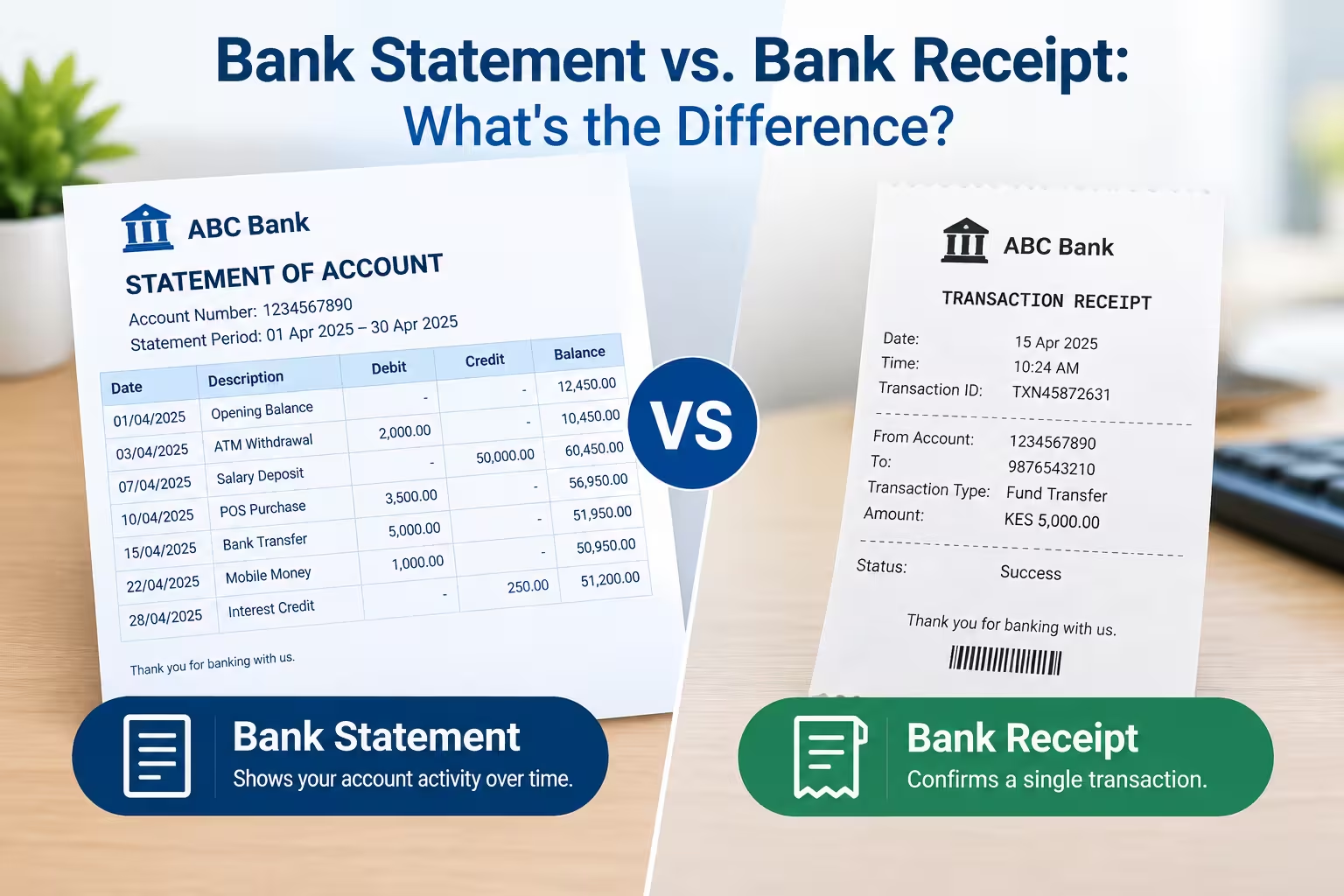
A bank statement is a periodic record — usually monthly — showing every transaction, fee, and balance in your account over that time frame. A bank receipt, by contrast, is a one-time proof of a single transaction, such as a deposit, withdrawal, or transfer, issued at the moment it happens.
Both documents come from your bank, but they serve different purposes and are accepted for different kinds of verification.
Quick Comparison Table
| Feature | Bank Statement | Bank Receipt |
|---|---|---|
| Scope | All transactions over a period (weekly, monthly, quarterly) | One specific transaction |
| Issued | Automatically, on a recurring schedule | Immediately after a transaction |
| Format | Multi-page document or PDF | Single slip, printout, or digital confirmation |
| Common uses | Loan applications, visa applications, tax records, budgeting | Confirming a deposit, withdrawal, wire, or payment |
| Contains | Opening/closing balance, all debits/credits, fees, interest | Transaction amount, date, time, reference number |
| Legal weight | Comprehensive financial record | Point-in-time proof of a completed action |
What Is a Bank Statement?
A bank statement is an official financial document issued by your bank that lists your account details and every transaction that posted during the statement period, typically a month. It’s the closest thing to a full financial “report card” for your account.
Every standard bank statement includes a few core elements:
- Account and bank details — account number, statement period, and the issuing institution’s contact information.
- Opening and closing balance — the amount in the account at the start of the period and at the end of it.
- A full transaction list — every deposit, withdrawal, transfer, and fee, typically listed in chronological order, showing the posting date, dollar amount, and payee for each entry.
- Fees and interest — for interest-bearing accounts, the statement will also show interest earned during the period.
Banks are generally only obligated to issue a statement for months when there’s account activity, according to consumer banking guidance from the Consumer Financial Protection Bureau. Once a statement is generated, it becomes the official, unchangeable record of that period — banks don’t go back and revise an old statement when an error is later discovered; instead, corrections show up as new transactions on a later statement.
Why Bank Statements Matter
Statements aren’t just paperwork — they’re a working financial tool. Reviewing your statements regularly helps you track expenses, catch accounting errors, and spot fraudulent activity early. They’re also the backbone of account reconciliation, the process of comparing your bank’s record against your own ledger or budgeting app to catch discrepancies before they become bigger problems.
Beyond personal budgeting, statements are the document most third parties actually want to see. Mortgage underwriters, in particular, rely on multiple months of statements to verify cash flow for self-employed borrowers who can’t provide traditional W-2s — a practice formalized in products known as bank statement loans.
What Is a Bank Receipt?
A bank receipt is narrower and more immediate. It’s the confirmation slip, printout, or digital notification you get the moment a specific transaction — a cash deposit, a wire transfer, a bill payment, an ATM withdrawal — is processed. Think of it as a snapshot of one moment, not a summary of a season.
A typical bank receipt includes:
- The transaction type (deposit, withdrawal, transfer, payment)
- The exact amount
- The date and timestamp
- A reference or confirmation number
- The account it was applied to
Unlike a statement, a receipt doesn’t show your balance history, other transactions, or fees charged elsewhere in the period. It exists purely to prove that one action occurred and was completed successfully.
Key Differences at a Glance
1. Time frame. A statement covers a period; a receipt covers a moment. This is the single biggest distinction and the one that determines which document you need for a given task.
2. Level of detail. A statement aggregates dozens or hundreds of line items into one document. A receipt isolates a single line item with more granular detail (like an exact timestamp) than a statement typically shows.
3. How you get them. Statements are issued automatically on a recurring cycle — monthly for most checking and savings accounts. Receipts are generated on demand, right after you complete a transaction, whether at a branch, ATM, or online.
4. Purpose in verification. A statement proves overall financial behavior and account health over time. A receipt proves that one specific transaction actually happened — useful when a payment gets disputed or a deposit needs to be tracked.
When Do You Need Each One?
Use a bank statement when:
- Applying for a mortgage, auto loan, or apartment lease that requires proof of income or savings
- Filing taxes and substantiating business income or deductible expenses
- Applying for a visa or immigration paperwork that requires proof of funds
- Reconciling your books at month-end
- Disputing a pattern of unauthorized charges
Use a bank receipt when:
- Confirming a specific deposit or payment cleared
- Proving you paid a bill or vendor on a specific date
- Resolving a single disputed transaction with a merchant or bank
- Keeping records for expense reimbursement on an individual purchase
This distinction matters most in tax and bookkeeping contexts. The IRS doesn’t actually require a “receipt” in the retail sense for every expense — documentary evidence like credit card and bank statements that show the payee, amount, and date can satisfy IRS recordkeeping requirements in many cases, especially for expenses under the $75 threshold outlined in IRS guidance on travel and business expense substantiation. That said, for specific high-value or scrutinized purchases, an itemized receipt tied to the exact transaction is still the stronger form of proof.
Are Bank Statements and Bank Receipts Legally Interchangeable?
Not always. Some institutions and government agencies specify exactly which document they’ll accept, and submitting the wrong one can delay an application. A loan underwriter asking for “the last two months of bank statements” won’t accept a stack of individual deposit receipts, since they need the full transaction history and balance trend, not isolated data points.
Conversely, if a landlord or vendor disputes whether a specific rent or invoice payment was made, a bank statement line item may not carry enough detail — a receipt with a timestamp and confirmation number settles the question faster.
When in doubt, read the specific request carefully. Terms like “proof of funds,” “statement of account,” or “transaction history” almost always call for a statement. Terms like “proof of payment” or “confirmation of transaction” call for a receipt.
How to Get a Bank Statement or Receipt
Most banks now make both available digitally:
- Online banking or mobile app — Statements are usually archived under an “eStatements” or “Documents” tab, often for 7 years or more. Receipts for individual transactions typically appear immediately in your transaction history and can be downloaded as PDFs.
- ATM or branch teller — ATMs print a receipt after every deposit or withdrawal. Branch staff can also print or email a copy of a past statement on request.
- Customer service request — For older statements not available online, most banks can mail or email a certified copy, sometimes for a small fee.
Bottom Line
A bank statement gives you the full picture — every transaction, fee, and balance change over a set period — while a bank receipt gives you a single, timestamped proof point for one transaction.
Knowing which one a lender, landlord, or tax authority actually wants saves you a trip back to the bank and speeds up whatever application or dispute you’re handling. When the request calls for a financial history or proof of funds, reach for the statement; when it calls for proof that one specific payment happened, the receipt is the faster, more precise answer.
Related Articles
Importance of Keeping Receipts: 10 Reasons You Should Save Them