
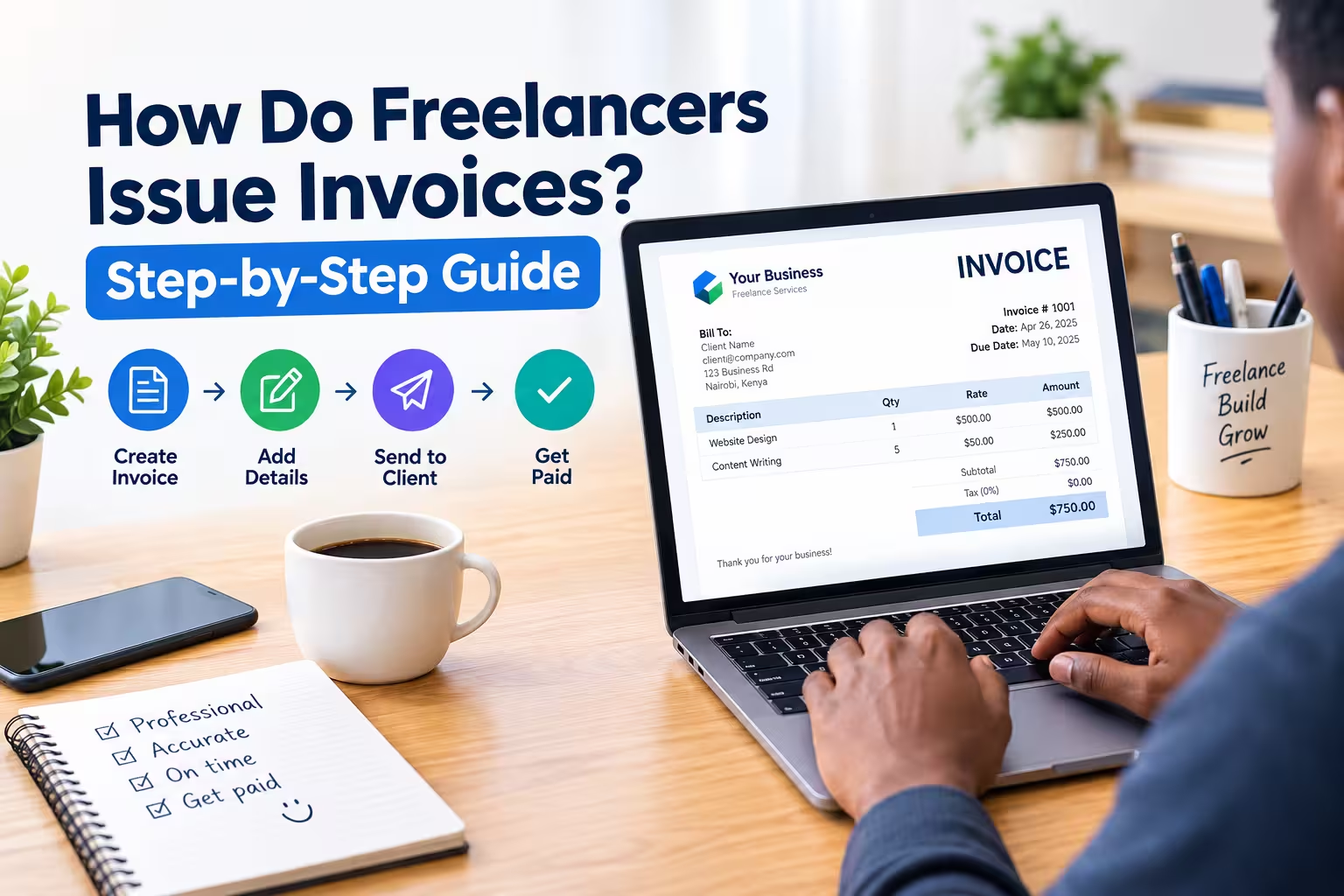
Freelancers issue invoices by creating a numbered document that lists their contact details, the client’s details, an itemized breakdown of the work, the total amount owed, and a payment due date, then delivering it by email, a client portal, or invoicing software. Most freelancers generate this document with a free invoice generator or accounting app rather than building one from scratch each time. Below is exactly how the process works, what to include, and how to get paid faster.
What Is a Freelance Invoice?
A freelance invoice is a formal request for payment that a self-employed worker sends to a client after completing agreed-upon work. Unlike a receipt, which confirms payment already made, an invoice initiates the payment and creates a paper trail for both parties’ tax and accounting records.
Because freelancers aren’t employees, no employer withholds taxes or issues automatic pay stubs. The invoice is the only official record proving the work happened and the amount owed, which makes it essential for cash flow, bookkeeping, and tax filing.
What Every Freelance Invoice Needs to Include
A valid, professional invoice generally needs the following fields. Missing any of these is one of the most common reasons clients delay payment or send an invoice back for correction.
- Your business name and contact information — legal name (or DBA), address, email, and phone number
- Client’s name and billing details — the person or company responsible for payment
- Unique invoice number — sequential numbering (INV-001, INV-002, etc.) for tracking and tax records
- Invoice date and due date — when it was issued and when payment is expected
- Itemized description of services — what was delivered, hours or units, and rate per item
- Subtotal, taxes (if applicable), and total amount due
- Accepted payment methods — bank transfer, PayPal, Stripe, check, etc.
- Payment terms — Net 15, Net 30, due on receipt, or a specific date
Adding a short closing note or terms line at the bottom of the invoice, such as a late fee policy or thank-you message, also helps set expectations and reinforces a professional image. If you’re unsure what to put there, this collection of invoice footer text examples offers ready-to-use wording for late payment terms, thank-you notes, and legal disclaimers.
Step-by-Step: How Freelancers Issue an Invoice
1. Confirm the scope and rate before starting work. A written agreement or statement of work prevents disputes later, since an invoice with no matching contract is easier for a client to dispute or delay.
2. Choose an invoice format. Most freelancers use a free invoice generator, spreadsheet template, or accounting software rather than a blank document, since built-in numbering and calculations reduce errors.
3. Fill in the required fields. Add your details, the client’s details, a unique invoice number, the work performed, and the total due, following the checklist above.
4. Set clear payment terms. State the due date explicitly (for example, “Due within 15 days of invoice date”) rather than a vague term like “as soon as possible.”
5. Send the invoice through a reliable channel. Email with a PDF attachment is the most common method, though many freelancers now use invoicing platforms that email the client a payable link directly.
6. Log the invoice and follow up. Keep a record of every invoice sent, its due date, and its status (sent, paid, overdue) so nothing slips through the cracks.
You can generate a compliant invoice in under two minutes with this free invoice generator, which auto-fills the invoice number, date, and totals.
When Should Freelancers Send an Invoice?
Timing depends on the project structure. For one-off projects, send the invoice immediately upon delivery. For ongoing or retainer work, most freelancers invoice on a fixed schedule, such as the last business day of the month or every two weeks.
Waiting too long to invoice is a common, avoidable cause of cash flow problems. The sooner an invoice goes out, the sooner the payment clock starts, and delayed invoicing is one of the administrative habits linked to slower payment overall.
Why Getting Invoicing Right Matters: The Late Payment Problem
Invoicing correctly isn’t just an administrative formality — it directly affects how fast freelancers get paid. Late payments are widespread: research from Bonsai’s analysis of over 100,000 freelancer invoices found that 29% of all freelance invoices are paid at least one day past the due date, and female freelancers were paid late 31% of the time compared to 24% for male freelancers.
The financial exposure is significant at a broader level too. Intuit QuickBooks’ 2025 Small Business Late Payments Report found that 56% of small businesses currently have outstanding unpaid invoices, averaging $17,500 owed per business, and nearly half report invoices overdue by more than 30 days.
Freelancers report even sharper exposure. A 2022 study by the Independent Economy Council, cited by Ruul’s guide to handling late payments, found that 74% of freelancers are not paid on time and 59% are owed $50,000 or more in outstanding work. Clear, complete, and promptly sent invoices reduce this risk because unclear terms and missing payment details are among the most common reasons clients delay paying.
Frequently Asked Questions
How do freelancers usually get paid after invoicing?
Most freelancers get paid through bank transfer, PayPal, Stripe, or a check, depending on what payment methods are listed on the invoice. Including a direct payment link on digital invoices generally speeds up payment compared to requiring the client to initiate a manual transfer.
Can a freelancer send an invoice without a business license?
Yes. In the US, freelancers can legally invoice clients as sole proprietors without registering a formal business entity, though using an EIN instead of a personal Social Security number on tax forms is common for privacy.
What should a freelancer do if an invoice goes unpaid?
Send a polite follow-up reminder shortly after the due date passes, then escalate to a formal late notice referencing the original payment terms if there’s still no response after 1–2 weeks. Some jurisdictions, such as New York City under its Freelance Isn’t Free Act, give freelancers legal recourse including double damages for unpaid invoices tied to a written contract.
How many invoices should a freelancer send per client?
This depends on the project type: one invoice per completed project for one-off work, or a recurring invoice per billing cycle (weekly, biweekly, or monthly) for ongoing retainer work.
Is it better to invoice before or after completing the work?
Most freelancers invoice after delivering the work or milestone, though it’s common practice to request a deposit invoice (25–50% upfront) before starting larger projects to reduce non-payment risk.
Key Takeaway
Issuing a freelance invoice comes down to five things: complete business and client details, a unique invoice number, an itemized breakdown, clear payment terms, and a reliable delivery method. Getting these right from the first invoice reduces payment delays and keeps your bookkeeping clean at tax time. For a quick way to put this into practice, the free invoice generator creates a compliant, itemized invoice in minutes with no signup required.
Related Articles
Invoice Terms and Conditions: Essential Guide for Clear Payments